

CSIR-BRRI, UN-Habitat and UNEP Equip Craftsmen, Artisans and Students with Sustainable Construction Skills.
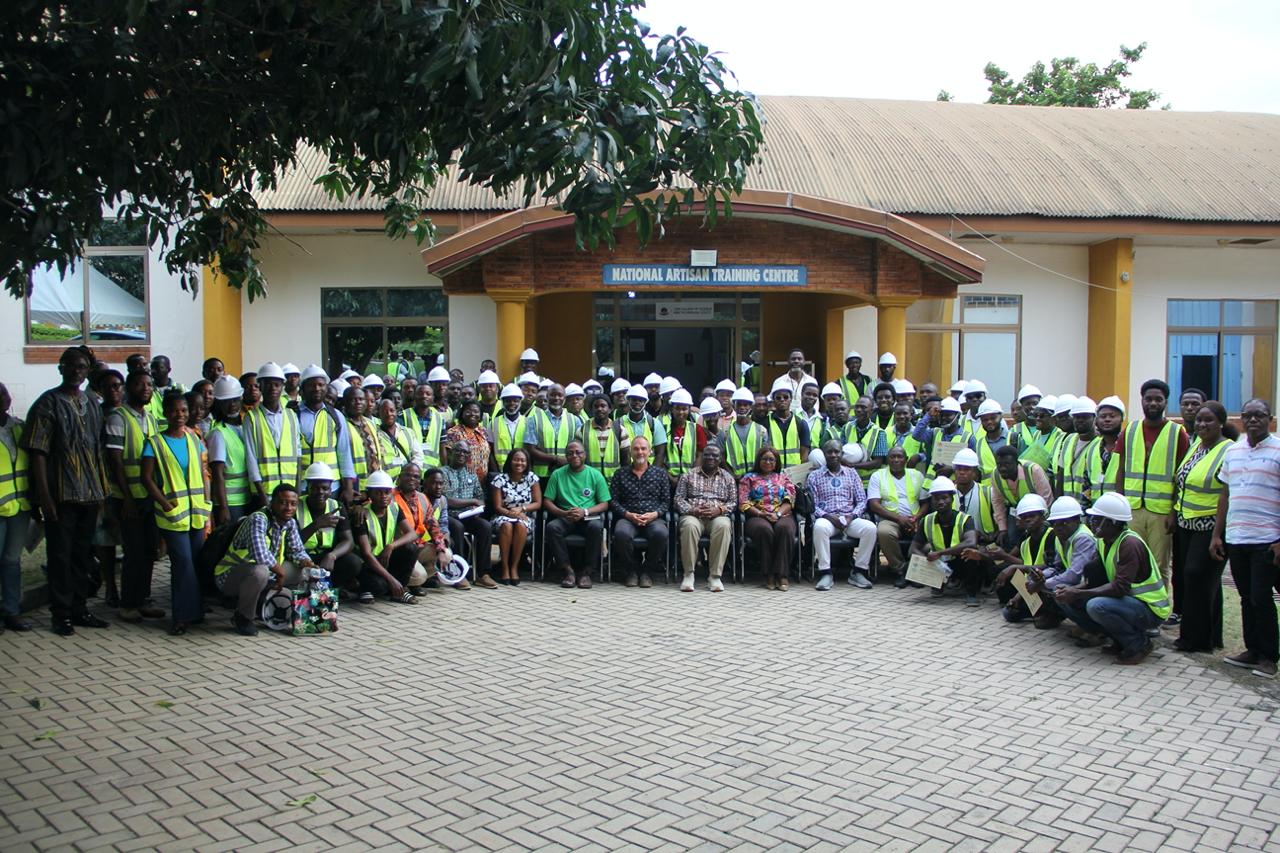
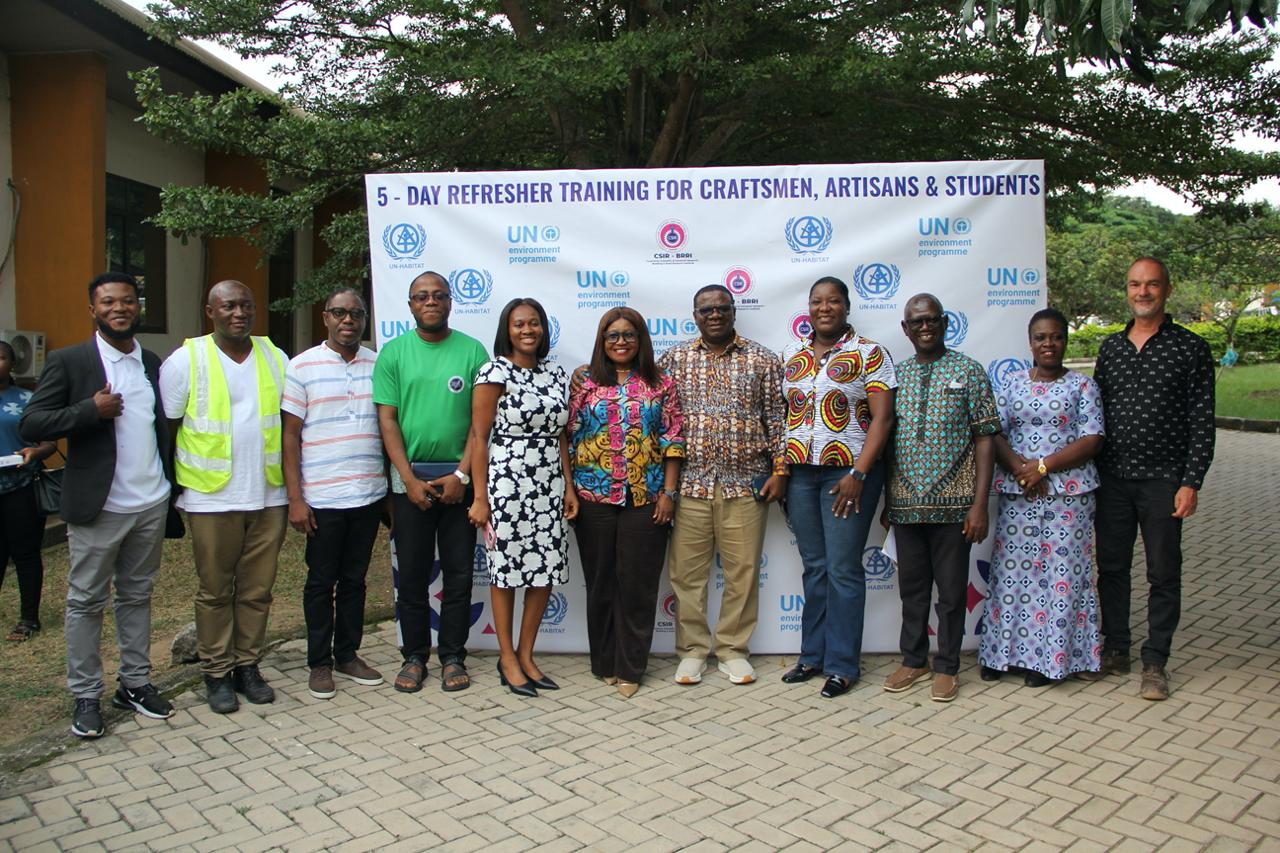 The Council for Scientific and Industrial Research – Building and Road Research Institute (CSIR-BRRI), in partnership with UN-Habitat and the United Nations Environment Programme (UNEP), has successfully completed a five-day refresher training programme aimed at strengthening the skills of craftsmen, artisans and students in sustainable construction practices.
Held from 27th to 31st July 2026 at the National Artisan Training Centre, CSIR-BRRI, the programme was organised under the theme, “Transforming the Built Environment Using Sustainable Materials.”
The training brought together participants for a combination of classroom instruction, practical demonstrations, hands-on construction activities and educational excursions. It focused on the application of sustainable and locally available building materials, including bamboo, Compressed Earth Blocks (CEB), rammed earth and adobe, low-carbon concrete, sandcrete, Polyethylene Terephthalate (PET) walls, burnt bricks and tiles.
The initiative formed part of efforts by CSIR-BRRI and its partners to enhance the technical capacity of practitioners and future professionals in the construction sector while encouraging the adoption of environmentally responsible, affordable and resilient building technologies.
Building Practical Skills for Quality Construction
The programme commenced with an introduction to sustainable construction practices and the importance of improving workmanship and professionalism within the built environment.
As the training progressed, participants were exposed to practical construction techniques designed to strengthen their ability to deliver durable and high-quality building projects.
Practical sessions covered concrete mixing and casting, mortar preparation, wall plastering (rendering) and the use of recycled PET bottles in construction. Facilitators took participants through appropriate material selection, mixing ratios, application techniques and quality control practices.
These activities provided participants with the opportunity to translate theoretical knowledge into practical skills while reinforcing the importance of good workmanship and adherence to appropriate construction standards.
Exploring Adobe and Rammed Earth Construction
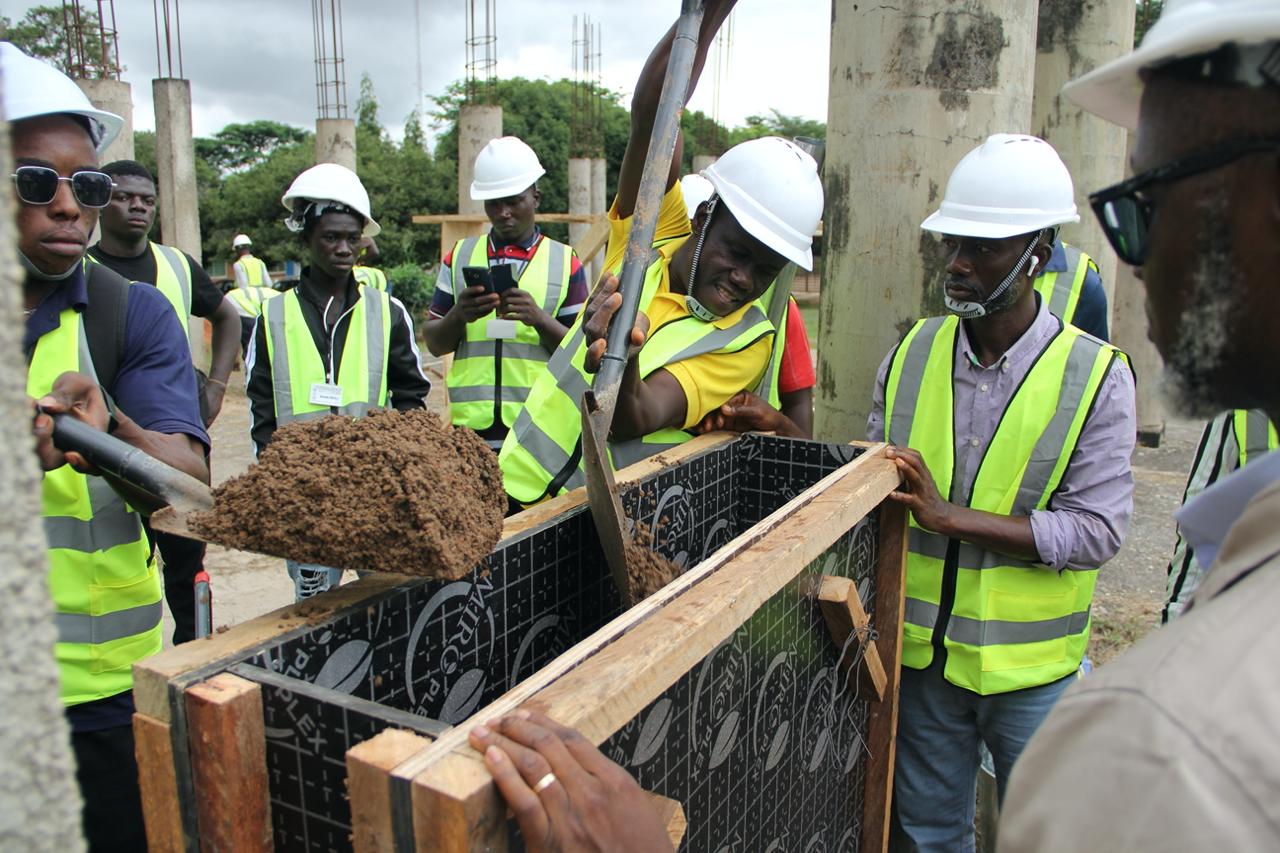 Another major component of the training focused on adobe and rammed earth construction, two building techniques that make effective use of earth as a locally available and sustainable construction material.
Participants received classroom instruction on the principles, benefits, material selection, construction processes and quality control measures associated with the technologies.
The theoretical sessions were complemented by field demonstrations, during which trainees participated in material preparation and construction activities under the guidance of experienced facilitators.
Participants also had the opportunity to reflect on their experiences during the training. Through interviews, some trainees shared how the knowledge and practical skills acquired could help improve their professional practice and their understanding of sustainable construction technologies.
Promoting Bamboo as a Sustainable Building Material
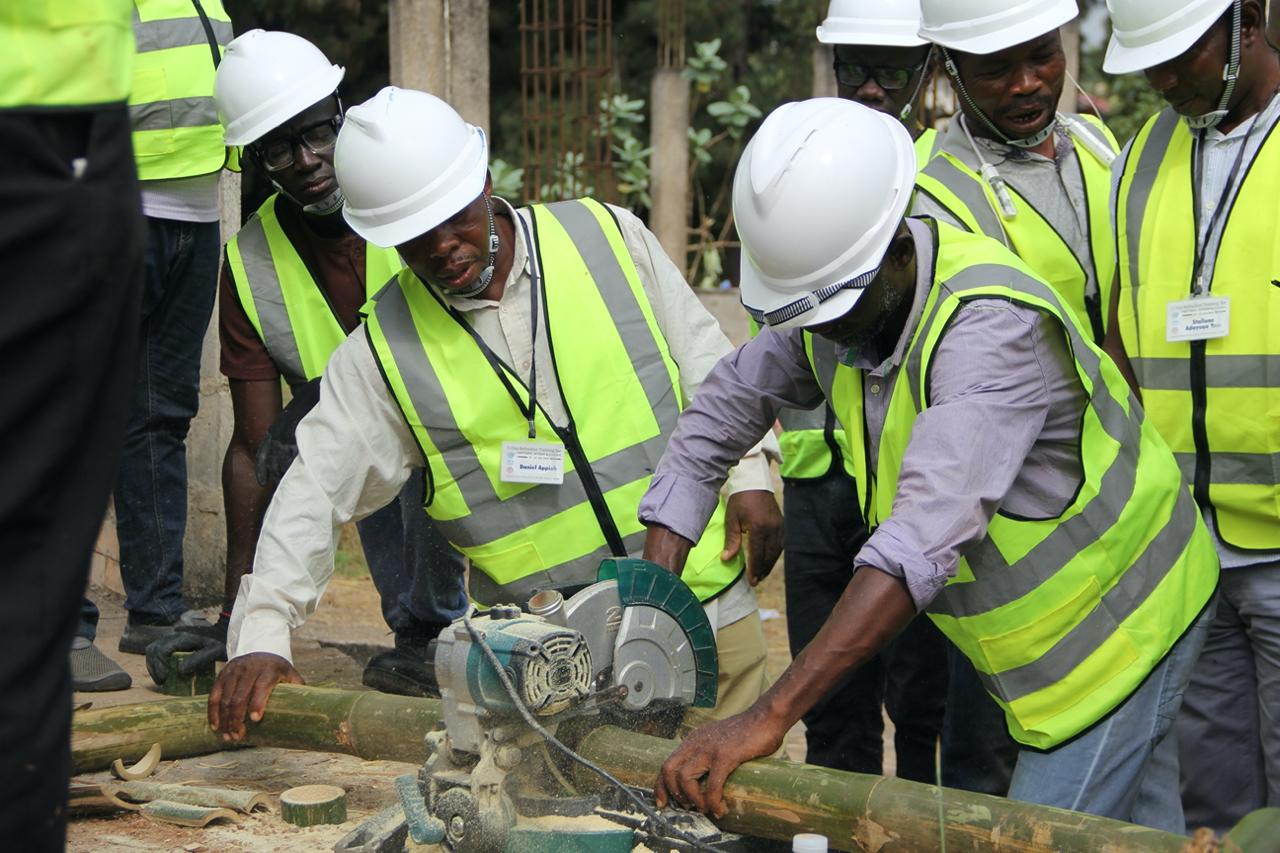 The fourth day of the programme introduced participants to bamboo and its applications within the built environment.
Through lectures and discussions, trainees explored the properties of bamboo and its potential uses in modern construction. The session highlighted the opportunities presented by locally available materials in reducing the environmental impact of construction while supporting affordable and sustainable development.
Participants subsequently embarked on an educational excursion to sites featuring bamboo, brick and rammed earth construction.
The excursion provided an opportunity for trainees to observe practical applications of the technologies they had studied and gain first-hand insight into how sustainable materials can be incorporated into durable and functional buildings.
Hands-On Training in Compressed Earth Block Construction
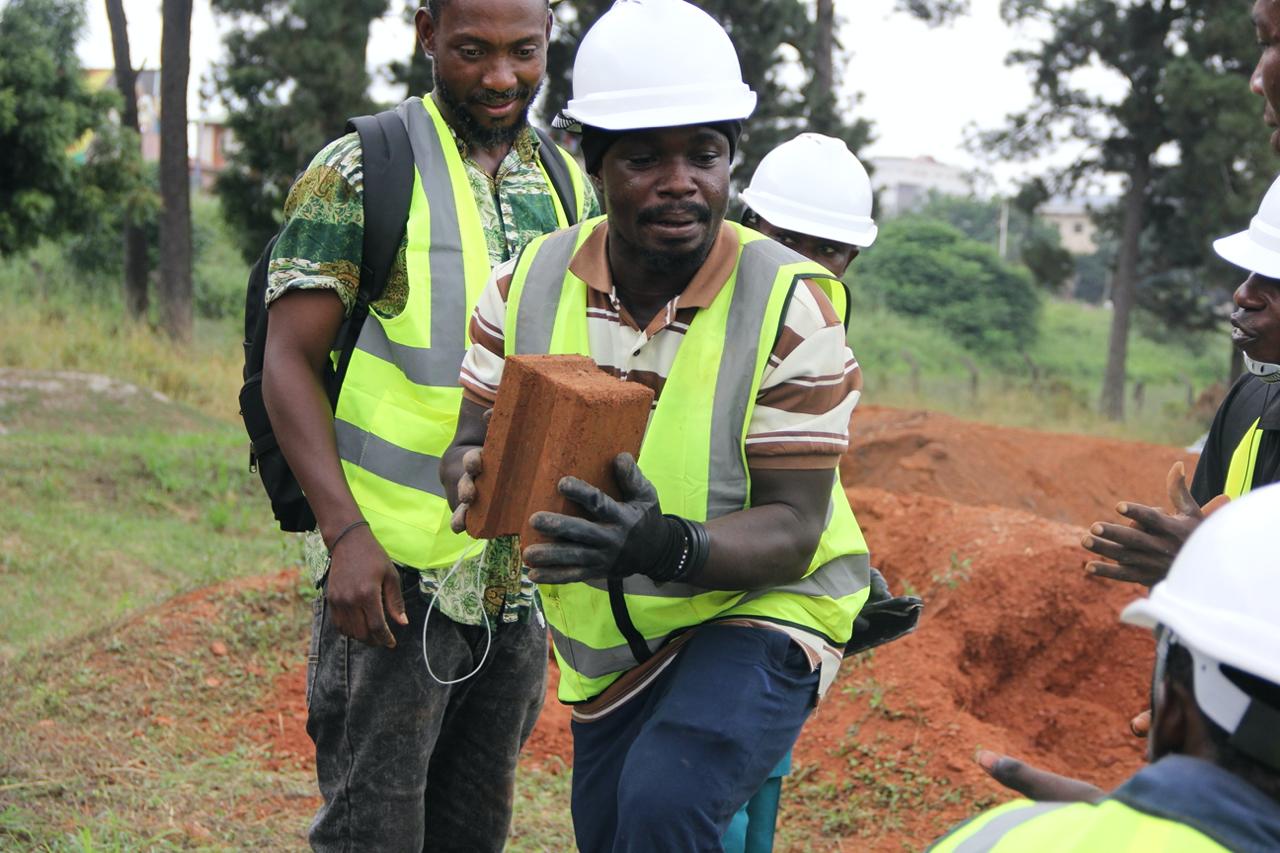
The final day centred on Compressed Earth Block (CEB) construction.
Participants received theoretical and practical instruction on the production and use of CEBs, including hands-on experience with the processes involved in producing the blocks for construction.
The session further demonstrated the potential of locally sourced materials and appropriate construction technologies to contribute to more affordable, environmentally responsible and resilient buildings.
The five-day programme concluded with a closing and certificate presentation ceremony, during which participants were recognised for successfully completing the training.
Strengthening Sustainable Construction in Ghana
The successful completion of the programme represents another step towards developing the skills required to transform Ghana's built environment through sustainable materials and construction technologies.
By combining scientific and technical knowledge with practical training, the programme equipped craftsmen, artisans and students with skills that can contribute to improved workmanship, efficient use of local materials and the delivery of safer, more durable and environmentally sustainable buildings.
The training also reinforced the importance of collaboration among research institutions, international development organisations, practitioners and future professionals in responding to challenges within the construction sector.
CSIR-BRRI extends its appreciation to UN-Habitat and the United Nations Environment Programme (UNEP) for their continued partnership and support in advancing sustainable and resilient construction practices in Ghana.
Through research, training, knowledge transfer and collaboration, CSIR-BRRI remains committed to promoting innovative building technologies and developing the human capacity required for a more sustainable and resilient built environment in Ghana.